

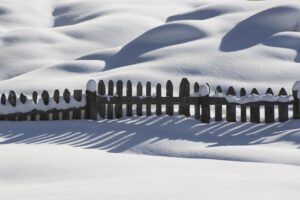
Here are some tips to keep your wood fence in great shape this winter.
Wood fences, when properly installed and built from high-quality materials, are made to last. But winter can take a toll on even the strongest of fences if proper measures aren’t taken. Between heavy, wet snow, ice buildup, freezing temps, harsh winds, and persistent moisture.
If you want your wood fence to make it through the winter without losing structural strength, now is the time to act. Here are some tips to keep your wood fence in great shape and maximize its lifespan.
Don’t Let Snow Pile Up Against the Fence
After a snowstorm, your fence is constantly exposed to moisture and to the weight of the snow. While it’s normal for snow to sit around the base, large mounds or packed piles can cause serious problems. Wet, heavy snow holds moisture against the boards and posts for extended periods, accelerating rot and causing discoloration.
If snow is pushed or drifted up against the fence, use a shovel or broom to gently redistribute it away from the panels. Avoid pressing or banging into the boards, as frozen wood is brittle and more prone to cracking. The goal isn’t to clear every flake, but to prevent large piles from staying there all season.
Watch for Ice Buildup
Freezing rain is one of the biggest threats to a wood fence. A sheet of ice exerts intense downward pressure on rails and pickets, and the freeze-thaw cycle can open small cracks that grow into larger structural issues.
After an ice event, take a few minutes to check your fence. If safe to do so, use a soft broom to loosen thin ice layers. Avoid forceful scraping, kicking, or hitting the fence, as cold wood can splinter easily. In most cases, it’s best to let the sun and natural temperatures do the work; trying to break it off manually often causes more damage.
Keep an Eye on the Fence Posts
Fence posts are the backbone of your system, and they’re also the most vulnerable once the ground freezes. When soil stays saturated from melting snow or ice, it places stress on the base of your posts.
Throughout winter, check your fence line for posts that are beginning to lean or wobble. You may notice gaps around the post base or visible separation where the post meets the surrounding soil. Early detection prevents bigger structural problems in the spring.
Improve Drainage Around the Fence Line
Drainage matters year-round, but it becomes especially important in winter. Repeated melting of snow saturates the soil around your fence. When water can’t drain properly, your fence sits in moisture that leads to rot, mold, and structural weakening.
If you notice puddling or soggy areas near the fence, add crushed stone or gravel at the base to promote better runoff. You don’t need to overhaul your yard during winter, but small adjustments can keep water from lingering where it shouldn’t.
Contact Hercules GSA Today!
Whether you need a commercial or a high security fence, Hercules Fence GSA can do the job for you. We have been providing professional, quality service since 1955 and work to uphold our reputation everyday. We have locations across the Maryland and Washington Metropolitan area and are ready to cater to your fencing needs. Give us a call at (410)-799-1555 or contact us online. You can also follow us on Facebook, Twitter,LinkedIn, and Pinterest for more updates!


